


If you have been researching Meshcore vs Meshtastic, you have probably noticed something straight away: both promise off-grid communication over LoRa, both have passionate communities, and both are attracting attention from people who want reliable messaging without depending on the internet or cell service.
So which one should you choose?
The honest answer is this: it depends on what you want your network to do.
If your goal is a broad, beginner-friendly, highly established off-grid messaging ecosystem, Meshtastic is usually the easier starting point. If you want a platform that leans heavily into a more security-focused, decentralised approach with a growing ecosystem and different workflow preferences, MeshCore may be the better fit. Meshtastic describes itself as an open-source, community-driven off-grid communication platform using inexpensive LoRa radios, while MeshCore positions itself as a secure, decentralised LoRa-based mesh radio platform with end-to-end encryption and no single point of failure.
In this Meshcore or Meshtastic comparison, I will break down the practical differences, who each platform suits best, and the hardware I would look at if you want to get started quickly using Seeed Studio gear.
What Is Meshtastic?
Meshtastic is an open-source platform that lets inexpensive LoRa radios form an off-grid mesh network for messaging and location sharing when normal communications infrastructure is unavailable or unreliable. Devices connect through LoRa, and users typically interact through a phone or computer over Bluetooth, Wi-Fi, or USB.
In practical terms, Meshtastic has become the more widely recognised option for hobbyists, outdoor users, preparedness groups, and experimenters who want to build a local mesh and start exchanging messages quickly. One of its biggest strengths is the breadth of community documentation, supported hardware, and general mindshare. Meshtastic’s own site highlights broad community support, multiple language options, and support across many device types and LoRa regions.
What Is MeshCore?
MeshCore is also an open-source, LoRa-based off-grid mesh platform, but its positioning is slightly different. MeshCore describes itself as a secure, decentralised mesh radio platform powered by LoRa, built without towers, subscriptions, or single points of failure, and with end-to-end encrypted communications. Its ecosystem also supports a growing range of hardware and companion software.
For many users, MeshCore feels like the choice for those who want to explore an alternative ecosystem, value its design philosophy, or prefer the way its firmware and companion tools work on supported hardware.
That does not automatically make it “better.” It simply means the difference between Meshcore vs Meshtastic is less about one winning on paper and more about which approach matches your use case.
Meshcore vs Meshtastic: The Main Difference
If you are asking what is the difference between Meshcore vs Meshtastic, the simplest way to think about it is this:
Meshtastic is usually the easier mainstream entry point. MeshCore is usually the more niche alternative with a different emphasis and user experience.
Here is the practical breakdown.
1. Ecosystem and Adoption
One of the more important differences in the Meshcore vs Meshtastic discussion is how MeshCore leans more deliberately into dedicated repeaters and managed routing.
With MeshCore, repeaters are a more visible part of the ecosystem. MeshCore’s own documentation and tooling include dedicated repeater firmware, repeater scanner features, repeater management tools, whitelist handling, neighbour/stats functions, and route tracing across the mesh. The platform also presents repeater nodes as a distinct hardware category for extending network range from high locations.
In practical terms, that means MeshCore feels more infrastructure-aware. Instead of thinking only in terms of individual handheld nodes passing traffic around opportunistically, MeshCore more openly supports the idea of building out a network with fixed repeater nodes placed in good locations to improve coverage, create more predictable paths, and strengthen routing across the mesh. MeshCore also explicitly says that if one path goes down, messages can find another, which reinforces that routing resilience is part of its design philosophy.
That is a useful point of differentiation from Meshtastic. Meshtastic is still very effective for mesh messaging, but the user experience often feels more centred around the broader node-to-node ecosystem and everyday client devices. MeshCore, by contrast, stands out for users who want to think more intentionally about repeaters, pathing, routing visibility, and building a more structured fixed network rather than simply running a collection of portable nodes. This is one reason MeshCore can be especially appealing to experimenters, network builders, and anyone interested in extending coverage with dedicated infrastructure.
Verdict:
If you want the safest first recommendation for most people, Meshtastic is usually easier to step into. For those who want reliability and scalability – Meshcore wins.
2. User Experience
Meshtastic benefits from a large installed base, plenty of guides, and a straightforward mental model for people who simply want to get nodes on the air and start testing. That matters because a mesh network is only fun when you can actually get other people on it too.
MeshCore offers a different feel. Some users will prefer that. If your local group is already adopting MeshCore, or if the security and decentralisation angle is the reason you are interested, it makes sense to follow the network you are most likely to actually use. MeshCore explicitly emphasizes decentralisation, resilience, and E2E encryption in its platform description.
Verdict:
For pure simplicity and easier onboarding, Meshtastic usually wins. For users drawn to MeshCore’s philosophy and workflow, MeshCore may be the more appealing choice.
3. Hardware Flexibility
This is where things get interesting in the Meshcore or Meshtastic comparison.
Both platforms depend heavily on hardware support. The good news is that Seeed Studio now has multiple devices that make getting started far easier, whether you want a ready-made tracker, a compact carry device, or a low-power repeater node. Seeed’s current lineup includes Meshtastic-specific devices, MeshCore-flashable hardware, and solar-ready options built around the XIAO ecosystem.
That means your choice of platform is no longer just about firmware. It is also about how you want to deploy your nodes.
Affiliate Disclaimer: This article contains affiliate links. If you buy through these links, I may earn a commission at no extra cost to you.
Best Seeed Studio Hardware for Meshtastic and MeshCore
Wio Tracker L1 Pro: Best for Users Who Want a Ready-to-Go Device


The Wio Tracker L1 Pro is one of the easiest recommendations here because Seeed offers it in both a Meshtastic-oriented version and a MeshCore version. For Meshtastic, Seeed describes it as a low-power node with LoRa, an nRF52840 processor, GPS, OLED display, rechargeable battery, and a durable 3D-printed enclosure. For MeshCore, Seeed sells a version pre-flashed with MeshCore Bluetooth Companion firmware.
Why I would recommend it:
- Ready-made and field-friendly
- Built-in display, battery, and GPS on the Meshtastic version
- Available for MeshCore with pre-flashed firmware support
- Good option if you do not want to build from separate modules first
- Great battery life
If you want one device that keeps your options open while you test both ecosystems, the Wio Tracker L1 Pro is a strong place to start. The L1 Pro comes in both pre-flashed Meshtastic and Meshcore versions directly from SeeedStudio.
SenseCAP Card T1000-E: Best for Portable Meshtastic Tracking


If your focus is Meshtastic and you want a compact, polished, carry-friendly node, the SenseCAP T1000-E is a very attractive option. Seeed describes it as a card-sized Meshtastic device with onboard GPS, a rechargeable battery, and an IP65-rated design using the LR1110, nRF52840, and GNSS hardware.
This is the kind of device that makes sense for:
- personal carry
- vehicle tracking
- field events
- hiking or outdoor use
- users who want something more finished than a bare dev board
Why I would recommend it:
It is compact, purpose-built, and much more approachable for users who want to deploy a Meshtastic node without treating the hardware like a bench project.
XIAO nRF52840 & Wio-SX1262 Kit: Best for Low-Power Solar Repeater Builds


If you want to build a lightweight node or experiment with low-power solar repeater applications, the XIAO nRF52840 & Wio-SX1262 Kit is one of the most interesting options in the Seeed ecosystem.
Seeed describes this kit as combining the XIAO nRF52840 with the Wio-SX1262, supporting BLE and LoRa with low power consumption, and notes standby power consumption under 5µA in its wiki documentation. It comes pre-flashed for Meshtastic and is positioned for low-power, battery-oriented applications.
This is exactly the sort of hardware that suits:
- DIY repeaters
- solar-powered remote nodes
- compact outdoor deployments
- custom sensor or telemetry builds
Why I would recommend it:
For a builder, this kit hits a very good balance between size, flexibility, and power efficiency. It is particularly attractive if you are designing a small solar repeater or a remote node where every milliamp matters.
Solar Node P1 Pro: Best All-in-One Repeater Solution
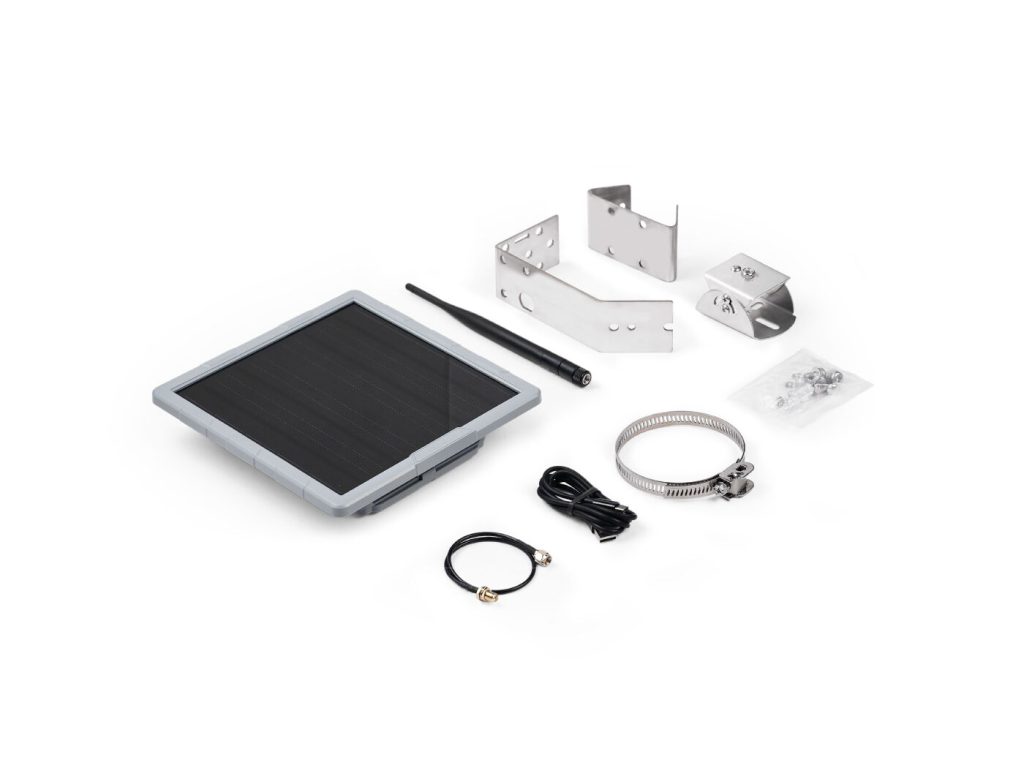

If you want an easier path to an outdoor node or repeater, the Solar Node P1 Pro is the standout prebuilt all-in-one recommendation.
Seeed’s Solar Node documentation describes it as an economical solar-powered communication node or repeater based on Meshtastic, integrating the XIAO nRF52840 Plus and Wio-SX1262, with the P1-Pro version adding GPS support. Seeed also positions it for network expansion in areas without coverage and for low-power operation.
This makes it a very sensible choice if you do not want to assemble a full outdoor system from scratch.
Why I would recommend it:
- Cleaner deployment path than a pure DIY build
- Solar-oriented out of the box
- Suitable for extending mesh coverage outdoors
- Strong option for users who want a repeater-style node without designing every subsystem themselves
For many people, the Solar Node P1 Pro is the easiest way to move from “I want better coverage” to actually putting a node in the field. The P1 Pro comes in both pre-flashed Meshtastic and Meshcore versions directly from SeeedStudio
Meshcore vs Meshtastic: Which Is Better for Beginners?
If someone asked me Meshcore or Meshtastic which is better for beginners, I would usually say Meshtastic.
That is not a knock on MeshCore. It is simply because Meshtastic currently has stronger momentum for first-time users, especially those who want:
- easier onboarding
- more guides and tutorials
- more off-the-shelf user experiences
- more chance of finding local users already on the same platform
When MeshCore Might Be the Better Choice
Now, if you are asking meshcore vs meshtastic – which is better in a more advanced sense, then the answer changes.
MeshCore may be the better choice if:
- your local group is already using it
- you prefer its decentralised and security-focused positioning
- you specifically want to explore its ecosystem and firmware approach
- you want compatible hardware like the Wio Tracker L1 Pro for MeshCore that is already supported by Seeed’s flashing workflow and documentation
In other words, MeshCore can absolutely be the right answer. It is just not automatically the best answer for every first-time buyer.
Meshtastic vs MeshCore: Final Verdict
So, in the full Meshcore vs Meshtastic comparison, which one should you pick?
Pick Meshtastic if:
- you are brand new to LoRa mesh networking
- you want the bigger mainstream ecosystem
- you want easier entry and more beginner support
- you want polished, readily available hardware options like the T1000-E, Wio Tracker L1 Pro, Solar Node P1 Pro, or XIAO nRF52840 & Wio-SX1262 Kit for building out your network
Pick MeshCore if:
- you specifically prefer its decentralised, encrypted platform approach
- your group is already using it
- you want to experiment beyond the more common Meshtastic path
- you enjoy building repeaters and infrastructure to expand the network
My Practical Recommendation
For most readers landing on this page from a search like Meshcore or Meshtastic, I would recommend starting with Meshtastic hardware from Seeed Studio, then expanding based on your use case – all of the devices can easily be flashed to run one or the other.
A very sensible setup would be:
- T1000-E for personal carry and portable messaging
- Wio Tracker L1 Pro for a more full-featured field node
- XIAO nRF52840 & Wio-SX1262 Kit for custom low-power solar repeater projects
- Solar Node P1 Pro for a cleaner all-in-one outdoor repeater solution
That combination gives you a practical path from handheld node to infrastructure node without having to jump between mismatched hardware ecosystems.
Conclusion
The question is not really “Is MeshCore better than Meshtastic?”
The better question is: Which one fits the network you actually want to build?
If you want the easier, broader, more beginner-friendly path, start with Meshtastic. If you are drawn to MeshCore’s ecosystem and philosophy, that may be the right route for you.
Either way, Seeed Studio now has a strong range of hardware that makes both experimentation and deployment much easier. And if your goal is to go from curiosity to a real working network, starting with proven devices like the Wio Tracker L1 Pro, T1000-E, XIAO nRF52840 & Wio-SX1262 Kit, and Solar Node P1 Pro is a very practical move.

